Thyroid FNA (Fine-Needle Aspiration): A Precise and Minimally Invasive Method for Diagnosing Thyroid Diseases**
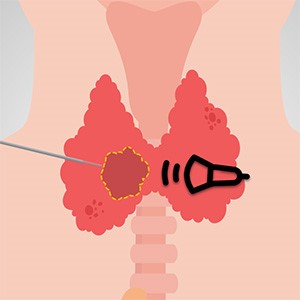
Fine-Needle Aspiration (FNA) of the thyroid is an important and minimally invasive diagnostic procedure used to evaluate thyroid nodules or lumps. This method helps physicians accurately determine whether these nodules are benign or malignant. Given the high prevalence of thyroid diseases worldwide, FNA plays a key role as an effective and safe diagnostic tool in the management and treatment of these conditions.
#### **Thyroid Anatomy and Function**
The thyroid is a butterfly-shaped gland located in the front of the neck. This gland is responsible for producing thyroid hormones, which play a vital role in regulating the body’s metabolism, growth and development of the nervous system, and maintaining energy balance. Thyroid disorders can lead to numerous problems, including hypothyroidism, hyperthyroidism, thyroid inflammation (thyroiditis), and the formation of thyroid nodules.
#### **Thyroid Nodules: Causes and Prevalence**
Thyroid nodules are lumps that form within or on the thyroid gland. These nodules can be solid or fluid-filled (cystic) and are mostly asymptomatic. However, some may cause symptoms such as difficulty swallowing, shortness of breath, or changes in voice. The prevalence of thyroid nodules increases with age and is more common in women than in men.
The causes of thyroid nodule formation are varied and can include iodine deficiency, thyroid inflammation, genetic factors, and radiation exposure. While the vast majority of these nodules are benign, a small percentage may be malignant and require immediate treatment.
#### **The Importance of Accurate Diagnosis of Thyroid Nodules**
Accurate diagnosis of thyroid nodules is essential for determining the appropriate treatment. Imaging techniques such as ultrasound can examine the size, shape, and structure of the nodules, but a biopsy is required to determine their cellular nature. This is where FNA comes in as a precise and minimally invasive diagnostic method.
#### **Steps of Performing a Thyroid FNA**
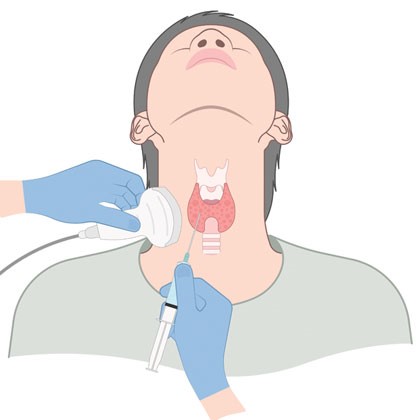
A thyroid Fine-Needle Aspiration is typically performed in a doctor’s office or clinic and does not require hospitalization. The steps of the procedure are as follows:
1. **Initial Evaluation:** Before performing FNA, the physician may order a thyroid ultrasound to more precisely examine the size and location of the nodule. This helps the doctor select the most accurate point for sampling.
2. **Patient Preparation:** The patient usually lies down with their neck slightly extended (bent backward) to make the thyroid more accessible. A small pillow may be used to support the neck.
3. **Local Anesthesia:** In some cases, the doctor may use a local anesthetic to reduce patient discomfort, although the procedure is often performed without the need for anesthesia.
4. **Biopsy:** The physician uses a very thin and fine needle to take small samples of cells from the nodule. This may be repeated several times to collect sufficient samples for microscopic examination.
5. **Sample Analysis:** The collected samples are sent to a pathology laboratory to be examined under a microscope. Pathologists analyze the cells for signs of cancer or other disorders.
#### **Advantages of Thyroid FNA**
Due to its numerous advantages, Thyroid FNA has become a standard method for diagnosing thyroid nodules. Some of these advantages include:
* **High Accuracy:** FNA can accurately differentiate between benign and malignant nodules.
* **Minimally Invasive:** The procedure requires no surgical incision and has very few side effects.
* **Quick Performance:** FNA is usually completed in less than 30 minutes, and the patient can return to normal activities immediately afterward.
* **Low Cost:** Compared to surgical methods, FNA is less expensive and cost-effective for patients.
#### **Disadvantages and Limitations of Thyroid FNA**
Despite its many advantages, Thyroid FNA has some limitations, including:
* **Requires Expertise:** The accuracy of FNA heavily depends on the skill of the performing physician and the experience of the pathologist. Incorrect sampling or misinterpretation can lead to false results.
* **Inadequate Samples:** In some cases, the collected samples may be insufficient for diagnosis, necessitating a repeat FNA.
* **Indeterminate Diagnosis:** In some instances, FNA results may be indeterminate (atypical or suspicious), requiring additional tests such as surgical biopsy or genetic testing.
#### **Thyroid FNA Results and Next Steps**
FNA results typically fall into one of the following categories:
1. **Benign:** In this case, the nodule cells show no signs of malignancy. The patient may only require regular monitoring.
2. **Malignant:** If cancerous cells are identified, the patient may require surgery to remove the thyroid (thyroidectomy) or other treatments such as radiation therapy.
3. **Indeterminate or Suspicious (Atypia of Undetermined Significance/Follicular Lesion of Undetermined Significance – AUS/FLUS, or Suspicious for Malignancy):** In these cases, the FNA results are unclear. The physician may then recommend further tests, such as a surgical biopsy (diagnostic lobectomy) or molecular/genetic testing.
4. **Non-Diagnostic:** If the collected samples are insufficient, the FNA may need to be repeated.
#### **Potential Complications of Thyroid FNA**
Thyroid FNA is a safe procedure, and side effects are rare. However, some potential complications include:
* **Bruising or Swelling:** There may be minor bruising or swelling at the biopsy site, which usually resolves within a few days.
* **Mild Pain:** Some patients may experience mild pain at the sampling site.
* **Bleeding:** In rare cases, minor bleeding may occur.
* **Infection:** The risk of infection is very low, but if it occurs, it requires antibiotic treatment.
#### **Conclusion**
Fine-Needle Aspiration (FNA) of the thyroid is a precise, minimally invasive, and effective diagnostic procedure for evaluating thyroid nodules. This method helps physicians accurately diagnose whether nodules are benign or malignant and plan an appropriate treatment strategy for patients. Despite some limitations, FNA remains a standard method in the diagnosis of thyroid diseases and plays a crucial role in improving patients’ quality of life. With timely and accurate diagnosis, many thyroid conditions are manageable and treatable.