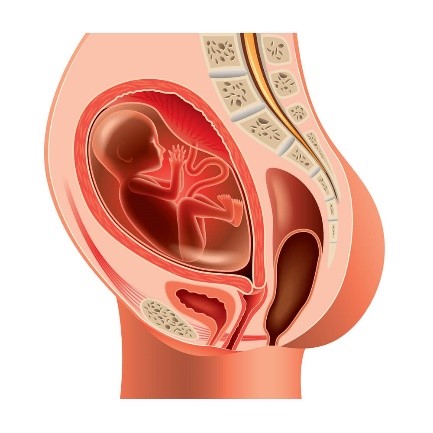
Retained Placenta
Retained Placenta refers to a condition where part of the placenta remains in the uterus after childbirth. This complication can lead to serious problems such as severe bleeding, infection, and fertility issues. Treatment for retained placenta typically involves both surgical and non-surgical methods. One modern and effective approach to managing this problem is Interventional Radiology, which specifically focuses on minimally invasive techniques. This article will examine the details of retained placenta, treatment methods, the advantages and disadvantages of Interventional Radiology, and necessary post-treatment care.
What is Retained Placenta?
Retained placenta refers to a situation where part of the placenta remains in the uterus after delivery. This condition may occur for the following reasons:
-
Vaginal Delivery: In some cases, part of the placenta may not be completely expelled.
-
Cesarean Section: The likelihood of placental retention is higher in cesarean deliveries.
-
Placental Adhesion: In some instances, the placenta may adhere to the uterine wall and fail to detach.
Symptoms of Retained Placenta
Symptoms of a retained placenta may include:
-
Heavy Bleeding: Postpartum bleeding that may increase rapidly.
-
Abdominal Pain: Pain or discomfort in the abdominal area.
-
Fever: Infection may cause an elevated temperature.
-
Fatigue and Weakness: Resulting from anemia due to blood loss.
What is Interventional Radiology?
Interventional Radiology (IR) is a branch of radiology that uses imaging techniques to provide minimally invasive methods for diagnosing and treating diseases. These procedures involve the use of catheters, needles, and other tools to perform therapeutic interventions with minimal damage to surrounding tissues.
Advantages of Interventional Radiology
-
Minimally Invasive: Does not require open surgery.
-
Short Recovery Period: Patients usually return to normal more quickly.
-
Reduced Complications: The risk of complications from surgery is lower.
-
High Precision: The use of imaging techniques provides high accuracy in performing therapeutic procedures.
Treating Retained Placenta with Interventional Radiology
Embolization Method
One effective Interventional Radiology method for treating retained placenta is embolization. This procedure involves blocking the blood vessels that supply the area of the retained placental tissue.
Steps of Performing Embolization
-
Patient Preparation: The patient must undergo necessary evaluations and receive sufficient information about the procedure.
-
Local Anesthesia: The area where the catheter will be inserted is prepared with a local anesthetic.
-
Catheter Placement: Guided by imaging (such as ultrasound or CT scan), the physician inserts the catheter into the blood vessel.
-
Injection of Embolic Materials: Specific materials such as polymer particles or coils are injected through the catheter to cut off blood flow to the area of the retained placenta.
-
Patient Monitoring: The patient is monitored after the procedure to ensure no complications have arisen.
Advantages and Disadvantages of Embolization
Advantages
-
Non-Invasive Method: Does not require open surgery and has a shorter recovery time.
-
Symptom Reduction: Many patients experience a significant reduction in their symptoms after this procedure.
-
Uterus Preservation: Unlike a hysterectomy, this method allows for the preservation of the uterus.
Disadvantages
-
Possible Side Effects: Like any other medical procedure, embolization may be associated with side effects.
-
Risk of Recurrence: Some patients may experience a recurrence of the problem after some time.
-
Need for Ongoing Follow-up: Patients must be monitored by a doctor to ensure positive results are maintained.
Potential Complications of Embolization
Although embolization is considered a safe procedure, it may have some complications:
-
Post-Procedural Pain: Some patients may experience pain after the procedure.
-
Infection: There is a risk of infection at the catheter insertion site.
-
Re-bleeding: If the embolic materials cannot completely block the vessels.
-
Damage to Surrounding Tissues: In rare cases, surrounding tissues may be damaged.
Post-Treatment Care
After embolization, the patient should be monitored to ensure no complications occur. The following care is recommended:
-
Adequate Rest: The patient should rest for a few hours after the procedure.
-
Vital Sign Monitoring: Blood pressure and pulse should be checked regularly.
-
Avoidance of Strenuous Activity: Strenuous activities should be limited for a few days after the procedure.
-
Monitoring for Abnormal Symptoms: Any severe pain, fever, or signs of bleeding should be reported immediately.
Conclusion
Treating retained placenta using embolization by Interventional Radiology is an effective and minimally invasive option for managing problems arising from this condition. Given its numerous advantages, this method is a suitable choice for patients who cannot undergo surgery or are seeking non-surgical solutions.