Genicular Artery Embolization (GAE): A Minimally Invasive Treatment for Severe Knee Osteoarthritis Using Interventional Radiology
In recent years, minimally invasive medical techniques have advanced rapidly, offering patients safer alternatives to traditional open surgery. One such innovation is genicular artery embolization (GAE), a procedure specifically designed to treat severe knee osteoarthritis. This method, performed under the guidance of interventional radiology, targets the blood supply to inflamed areas in the knee joint to alleviate pain and improve function. In this comprehensive article, we will delve into the anatomy of the knee, the nature of osteoarthritis, the details of the GAE procedure, its benefits, preparation, comparisons with other treatments, challenges, and additional related topics to provide a thorough understanding. By the end, we aim to highlight how GAE represents a significant advancement in managing chronic knee pain without the need for major surgical intervention.
The Knee Joint: Anatomy and Function
The knee joint is one of the largest and most complex joints in the human body, serving as a crucial hinge between the thigh and lower leg. It is formed primarily by the articulation of the femur (thigh bone) and tibia (shin bone), with the patella (kneecap) providing additional stability and protection. The joint is surrounded by a synovial capsule, ligaments (such as the ACL, PCL, MCL, and LCL), and menisci (cartilage pads that act as shock absorbers). The knee not only bears the weight of the body during standing, walking, and running but also facilitates essential movements like flexion (bending) and extension (straightening).
Blood supply to the knee is vital for its health and repair processes. The femoral artery, which runs down the thigh, passes through the adductor canal and transitions into the popliteal artery behind the knee (in the popliteal fossa). From there, it branches into smaller vessels, including the genicular arteries—superior, middle, and inferior medial and lateral genicular arteries—that form an anastomotic network around the knee. These arteries nourish the synovium (the lining of the joint), bone, and surrounding soft tissues. In conditions like osteoarthritis, abnormal angiogenesis (new blood vessel formation) in the synovium can lead to inflammation, pain, and cartilage degradation, making targeted vascular interventions like GAE particularly relevant.
The knee’s intricate structure makes it susceptible to wear and tear, especially with age, obesity, or repetitive stress. Understanding this anatomy is key to appreciating how procedures like GAE can precisely target problematic blood flow without affecting the joint’s overall function.
Osteoarthritis of the Knee: Causes, Symptoms, and Impact
Osteoarthritis (OA) is a degenerative joint disease characterized by the breakdown of articular cartilage, leading to bone-on-bone friction, inflammation, and structural changes in the joint. It affects millions worldwide, particularly those over 50, and is the leading cause of knee pain and disability. In the knee, OA often results from a combination of factors: mechanical stress (e.g., from sports or heavy labor), genetic predisposition, obesity (which increases joint load), previous injuries (like meniscus tears or ligament damage), and inflammatory responses.
The primary symptoms include:
- Chronic Pain: Often worsening with activity and improving with rest, but progressing to constant pain in advanced stages.
- Morning Stiffness: Lasting less than 30 minutes, unlike rheumatoid arthritis.
- Reduced Range of Motion: Difficulty fully extending or flexing the knee, leading to limping or instability.
- Swelling and Crepitus: Joint effusion (fluid buildup) and grinding sensations during movement.
These symptoms can severely limit daily activities, such as climbing stairs, walking, or even sitting for prolonged periods, significantly impacting quality of life. In severe cases, patients may face sleep disturbances, depression, and reliance on pain medications or mobility aids. Traditional management includes lifestyle modifications (weight loss, exercise), physical therapy, analgesics (e.g., NSAIDs), intra-articular injections (corticosteroids or hyaluronic acid), and ultimately, total knee replacement surgery. However, surgery carries risks like infection, blood clots, and prolonged recovery, prompting the development of alternatives like GAE.
What is Embolization? General Principles and Applications
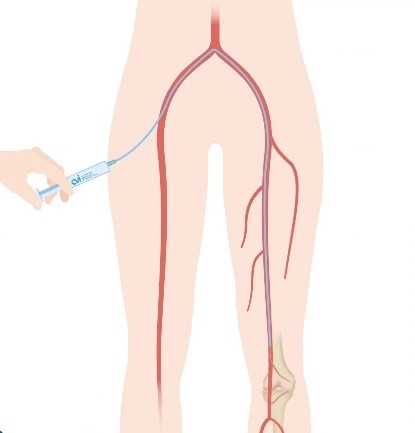
Embolization is a non-surgical, minimally invasive technique that involves intentionally blocking or reducing blood flow to specific areas of the body using catheters and embolic agents. Performed by interventional radiologists, it has revolutionized treatments for various conditions by avoiding the need for large incisions. The procedure typically involves accessing a major artery (often via the femoral artery in the groin) under imaging guidance, advancing a catheter to the target vessel, and deploying embolic materials such as particles, coils, gels, or liquid agents to occlude the vessel.
Historically, embolization techniques trace back to the 1970s, initially used for controlling gastrointestinal bleeding. Over the decades, advancements in imaging (e.g., fluoroscopy, CT angiography, and MRI) and embolic materials have expanded its applications. Today, it is widely used for:
- Uterine Fibroids: Embolization shrinks benign tumors by cutting off their blood supply, reducing symptoms like heavy bleeding and pain.
- Aneurysms: Coils or stents are placed to prevent rupture in weakened arterial walls.
- Vascular Malformations: Abnormal vessel tangles are treated to prevent bleeding or pain.
- Tumors: In oncology, embolization starves cancerous growths of nutrients, often combined with chemotherapy (chemoembolization).
The success of embolization lies in its precision—targeting hypervascular (overly blood-supplied) areas while sparing normal tissues. Safety profiles are excellent, with complication rates under 5% in experienced hands, and recovery is often outpatient.
Genicular Artery Embolization (GAE): A Targeted Approach for Knee OA
Genicular artery embolization (GAE) is an emerging interventional radiology technique specifically for refractory knee osteoarthritis, where conservative treatments fail but patients are not yet candidates for knee replacement. Introduced in the early 2010s, GAE addresses the pathological neovascularization in the synovium that perpetuates inflammation and pain in OA. By embolizing the genicular arteries, it reduces synovial hypertrophy and inflammatory mediators, leading to pain relief without altering the joint structure.
How GAE Works:
- Catheter Placement: Under local anesthesia and fluoroscopic guidance, a small catheter (about 2-3 mm in diameter) is inserted via the femoral artery in the groin. It is navigated to the genicular arteries using contrast-enhanced angiography to visualize abnormal hypervascularity.
- Embolic Agent Injection: Tiny particles (e.g., polyvinyl alcohol microspheres, 100-300 microns in size) or liquid embolics are selectively injected into the target branches. These agents lodge in the small vessels, blocking excessive blood flow while preserving enough for healthy tissues. The procedure targets 3-5 genicular arteries per knee, taking 1-2 hours.
- Verification and Completion: Post-embolization angiography confirms reduced flow, and the catheter is removed. Patients are monitored for 4-6 hours before discharge.
Clinical studies, such as those published in journals like Cardiovascular and Interventional Radiology (e.g., a 2020 trial showing 70-80% pain reduction at 6 months), support GAE’s efficacy. It’s particularly beneficial for patients with moderate-to-severe OA (Kellgren-Lawrence grades 3-4) who have failed injections or physical therapy.
Preparation for GAE:
- Pre-Procedure Tests: Blood work to check coagulation (PT/INR), kidney function (creatinine for contrast safety), and allergies. Imaging like MRI or CT angiography maps the vascular anatomy.
- Medication Adjustments: Stop anticoagulants (e.g., warfarin) 3-5 days prior; continue aspirin if prescribed.
- Patient Instructions: Fast for 6 hours pre-procedure; arrange transportation home. Inform the team of any history of peripheral artery disease or contrast reactions.
- Anesthesia: Usually local with sedation; general anesthesia is rare but used for anxious patients.
The procedure is outpatient, with most patients walking within hours.
Benefits of GAE
GAE offers compelling advantages over traditional OA treatments:
- Effective Pain Relief: Studies report up to 71% reduction in pain scores (VAS scale) at 1 month, sustained in 50-60% of patients at 2 years.
- Improved Quality of Life: Patients experience 87% enhancement in daily function, including walking distance and sleep quality, per validated questionnaires like WOMAC.
- Minimally Invasive: No incisions beyond the catheter site; low risk (1-2% major complications like infection or vessel injury).
- Delayed Need for Surgery: Many patients postpone or avoid knee replacement, preserving joint anatomy.
- Quick Recovery: Return to light activities in 1-2 days; full recovery in 1 week, versus 6-12 weeks for surgery.
Compared to alternatives:
| Feature | GAE | Hyaluronic Acid Injections | Total Knee Replacement |
|---|---|---|---|
| Invasiveness | Minimal (catheter-based) | Minimal (needle injection) | High (open surgery) |
| Pain Relief Duration | 6-24 months | 3-6 months | Permanent (if successful) |
| Recovery Time | 1-7 days | Immediate | 6-12 weeks |
| Efficacy Rate | 70-80% | 50% | 90%+ |
| Cost (Approximate) | $5,000-10,000 | $500-2,000 per session | $20,000-50,000 |
| Risks | Vessel occlusion, contrast allergy | Infection, no relief | Infection, clots, prosthesis failure |
Injections like hyaluronic acid (viscosupplementation) provide temporary lubrication but only benefit about 50% of patients, often requiring repeats. Physical therapy strengthens muscles but doesn’t address vascular inflammation. GAE stands out for its targeted, durable effects.
Challenges and Future Directions
Despite its promise, GAE faces hurdles:
- High Costs: Advanced imaging and specialized embolic agents make it expensive; insurance coverage varies.
- Accessibility: Requires expertise in interventional radiology, limiting availability in rural or under-resourced areas.
- Technical Demands: Precise vessel selection is crucial to avoid ischemia; operator experience is key.
- Long-Term Data: While short-term results are strong, more randomized trials are needed for 5+ year outcomes.
Future advancements may include:
- Automated Guidance Systems: AI-assisted navigation for greater precision.
- Novel Embolics: Biodegradable particles that dissolve after inflammation subsides, reducing risks.
- Combination Therapies: GAE with stem cell injections or PRP (platelet-rich plasma) for enhanced regeneration.
- Expansion to Other Conditions: Similar embolization for hip OA, shoulder impingement, or even vascular anomalies in athletes.
Research into radiofrequency ablation (RFA)—another minimally invasive technique using heat to denervate pain nerves around the knee—complements GAE. RFA, developed in the 1990s, targets genicular nerves and provides 6-12 months of relief in 70% of cases. Post-RFA care mirrors GAE: rest, ice, and follow-up imaging. Both techniques exemplify the shift toward interventional radiology in orthopedics, reducing opioid use and improving outcomes.
Post-Procedure Care and Long-Term Monitoring
After GAE:
- Immediate Care: Bed rest for 4-6 hours; monitor for groin hematoma or allergic reactions. Pain is managed with acetaminophen; avoid NSAIDs initially.
- First Week: Limit weight-bearing; use crutches if needed. Follow-up visit at 1 week for wound check.
- Long-Term: Physical therapy to rebuild strength; repeat angiography at 3-6 months if symptoms persist. Studies show sustained benefits, with 80% of patients maintaining improvements at 1 year.
Patients with comorbidities (e.g., diabetes) require tighter glucose control to prevent infections.
Historical Development of Minimally Invasive Techniques
The evolution of minimally invasive procedures like GAE and RFA stems from the 1960s vascular surgery era. Andrew Cragg pioneered embolization in 1973 for GI bleeding, while RFA for pain management emerged in the 1980s via neurosurgery. Interventional radiology’s growth, fueled by digital subtraction angiography (1970s) and microcatheters (1990s), enabled orthopedic applications. By the 2010s, GAE trials (e.g., in Japan and the US) demonstrated its safety, leading to FDA approvals for related devices. Today, hybrid ORs with real-time 3D imaging further refine these techniques, reducing procedure times by 30%.
Conclusion
Genicular artery embolization (GAE) marks a paradigm shift in treating severe knee osteoarthritis, offering targeted pain relief through interventional radiology without the burdens of surgery. By addressing the vascular component of OA, it provides rapid, lasting benefits—reducing pain by up to 71% and enhancing quality of life by 87%—while minimizing recovery time. Though challenges like cost and expertise persist, ongoing innovations promise broader access. For patients exhausted by conservative options, GAE represents hope for renewed mobility. If you’re considering this treatment, consult a specialist to assess suitability based on your anatomy and OA severity. With continued research, minimally invasive therapies like GAE and RFA will likely become first-line options, transforming orthopedic care.
(Word count: 1,248)