Vertebroplasty: A Modern Treatment for Vertebral Fractures Using Interventional Radiology
Vertebral fractures, particularly in the lumbar or thoracic spine, are common conditions often caused by osteoporosis, severe trauma, or underlying diseases. These fractures can lead to severe pain, reduced mobility, and, in some cases, spinal deformities. Vertebroplasty is a minimally invasive procedure that has emerged as an effective treatment for stabilizing these fractures and alleviating associated pain. Performed with the aid of interventional radiology, vertebroplasty involves injecting bone cement into the fractured vertebra to restore stability. This article provides a detailed exploration of vertebroplasty, its procedure, advantages, limitations, and the critical role of interventional radiology in its success.
What is Vertebroplasty?
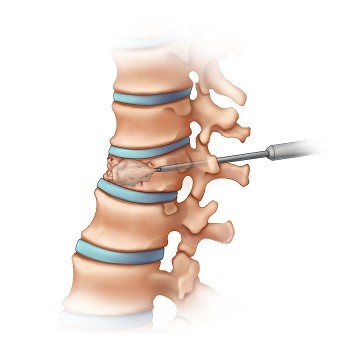
Vertebroplasty is a minimally invasive procedure designed to stabilize and strengthen fractured vertebrae in the spine. It involves injecting a specialized bone cement, typically polymethylmethacrylate (PMMA), into the damaged vertebra. Once the cement hardens, it stabilizes the fracture, reduces pain, and prevents further collapse of the vertebra. Vertebroplasty is most commonly used to treat compression fractures caused by osteoporosis, though it may also be applied to fractures resulting from tumors or trauma. The procedure is performed under imaging guidance to ensure precision and safety.
The Role of Interventional Radiology in Vertebroplasty
Interventional radiology is a medical specialty that uses advanced imaging techniques to guide minimally invasive procedures. In vertebroplasty, interventional radiologists rely on real-time imaging, such as fluoroscopy (a type of X-ray) or computed tomography (CT), to accurately navigate the needle and inject bone cement into the fractured vertebra. This imaging guidance ensures that the cement is delivered precisely to the target site, minimizing the risk of damage to surrounding structures like nerves, blood vessels, or the spinal cord. The integration of interventional radiology has significantly enhanced the safety and efficacy of vertebroplasty, making it a preferred option for many patients.
Procedure for Vertebroplasty
Vertebroplasty is typically performed in an operating room or interventional radiology suite, with the following steps:
- Patient Preparation: The patient is positioned prone (face down) on the procedure table. The interventional radiologist explains the procedure, benefits, and risks. Pre-procedure evaluations include imaging (e.g., X-ray, MRI, or CT to assess the fracture), blood tests (e.g., coagulation profile), and a review of medications. Patients are advised to stop blood thinners (e.g., aspirin, warfarin) 3-5 days prior, if safe, and may fast for 4-6 hours. Prophylactic antibiotics may be administered to reduce infection risk.
- Anesthesia: Local anesthesia is applied to the skin and soft tissues at the entry site (typically in the back). Mild sedation (e.g., midazolam or fentanyl) is often used to enhance comfort, though general anesthesia is rarely needed unless the patient is highly anxious or multiple vertebrae are treated.
- Imaging Guidance: Using fluoroscopy or CT, the radiologist identifies the exact location of the fractured vertebra. This real-time imaging ensures accurate needle placement and monitors cement distribution during injection.
- Needle Insertion: A specialized hollow needle (11-13 gauge) is inserted through the skin and soft tissues into the fractured vertebra, typically via a transpedicular approach (through the pedicle of the vertebra). The needle’s path is carefully guided to avoid critical structures like the spinal cord or nerve roots.
- Cement Injection: Once the needle is correctly positioned, PMMA bone cement is slowly injected into the vertebra. The radiologist monitors the cement’s spread in real-time to ensure it fills the fracture without leaking into surrounding tissues. The cement hardens within 10-20 minutes, stabilizing the vertebra.
- Procedure Completion: The needle is removed, and the entry site is bandaged. The patient is monitored for 2-4 hours to check for complications like bleeding or neurological changes. Most patients are discharged the same day.
The entire procedure typically lasts 30-60 minutes per vertebra, with additional time for multiple levels.
Advantages of Vertebroplasty
Vertebroplasty offers several significant benefits, particularly for patients with painful vertebral compression fractures:
- Rapid Pain Relief: Studies (e.g., American Journal of Roentgenology, 2020) report that 70-90% of patients experience significant pain reduction within 24-48 hours, often eliminating the need for opioid analgesics.
- Short Recovery Time: As an outpatient procedure, patients can return home the same day and resume light activities within 24-48 hours, with full recovery in 1-2 weeks, compared to months for surgical alternatives.
- Minimally Invasive: Requires only a small puncture, reducing risks like infection, bleeding, or tissue damage compared to open spinal surgery (5-10% complication rate for surgery vs. <3% for vertebroplasty).
- Prevention of Spinal Deformity: Stabilizes the vertebra, reducing the risk of kyphosis (hunchback deformity) or height loss, which affects 20-30% of untreated osteoporotic fractures.
- Improved Mobility and Quality of Life: Pain relief enhances patients’ ability to perform daily activities, reducing dependency and improving psychological well-being.
Limitations and Potential Complications
Despite its advantages, vertebroplasty has limitations and potential risks, including:
- Limited Applicability: Best suited for osteoporotic compression fractures or tumor-related fractures. Traumatic fractures with significant bone displacement or spinal instability may require surgical fixation (e.g., spinal fusion).
- Cement Leakage: In 5-10% of cases, cement may leak outside the vertebra into surrounding tissues, veins, or the spinal canal, potentially causing pain, nerve compression, or, rarely, pulmonary embolism (0.1-0.5% incidence). Advanced imaging reduces this risk.
- No Cure for Osteoporosis: Vertebroplasty stabilizes the fractured vertebra but does not address the underlying bone loss, requiring ongoing osteoporosis treatment (e.g., bisphosphonates, calcium, vitamin D).
- Infection: Rare (<1%), but possible at the puncture site or within the vertebra, particularly in immunocompromised patients.
- Adjacent Vertebral Fractures: Increased stress on nearby vertebrae may lead to new fractures in 10-20% of patients within a year, necessitating further treatment.
- Transient Pain or Neurological Symptoms: Some patients experience temporary pain or numbness due to needle insertion or cement irritation, resolving within days.
Patients with severe spinal deformity, active infections, or bleeding disorders may not be candidates for vertebroplasty, requiring alternative approaches.
Indications for Vertebroplasty
Vertebroplasty is primarily used in the following cases:
- Osteoporotic Compression Fractures: Most common in elderly patients with osteoporosis, particularly postmenopausal women (25% lifetime risk of vertebral fractures).
- Tumor-Related Fractures: For vertebrae weakened by benign (e.g., hemangiomas) or malignant tumors (e.g., metastases, multiple myeloma), reducing pain and stabilizing the spine.
- High-Risk Surgical Candidates: Patients with comorbidities (e.g., heart disease, advanced age) who cannot tolerate open surgery benefit from this less invasive option.
- Failed Conservative Treatment: When pain persists despite 4-6 weeks of rest, analgesics, or bracing.
Post-Procedure Care and Recovery
Proper post-vertebroplasty care ensures optimal outcomes and minimizes complications:
- Immediate Monitoring: Patients are observed for 2-4 hours post-procedure, with checks for neurological changes (e.g., leg weakness, numbness), bleeding, or infection. Imaging may confirm cement placement.
- Activity Restrictions: Avoid heavy lifting, bending, or twisting for 1-2 weeks. Light activities can resume within 24-48 hours, with gradual progression to normal activities.
- Pain Management: Mild discomfort is managed with acetaminophen or NSAIDs. Severe or persistent pain requires immediate medical evaluation.
- Osteoporosis Management: Patients with osteoporotic fractures should continue treatments like bisphosphonates, calcium, vitamin D, or denosumab to prevent future fractures. Weight-bearing exercises and smoking cessation are also recommended.
- Follow-Up: A follow-up visit within 1-2 weeks assesses pain relief and mobility. Imaging (X-ray or CT) at 1-3 months monitors vertebral stability and checks for new fractures.
- Warning Signs: Report fever (>100.4°F/38°C), severe back pain, numbness, weakness, or breathing difficulties (possible pulmonary embolism) immediately.
Most patients experience significant pain relief within 1-2 days, with 80-90% reporting improved quality of life within a week.
Comparison with Other Treatments
Vertebroplasty is compared to alternative approaches for vertebral fractures:
| Feature | Vertebroplasty | Kyphoplasty | Conservative Treatment |
|---|---|---|---|
| Invasiveness | Minimally invasive | Minimally invasive | Non-invasive |
| Pain Relief | 70-90% (within days) | 80-90% (within days) | 50-70% (weeks-months) |
| Recovery Time | 1-7 days | 1-7 days | 4-12 weeks |
| Risks | Cement leakage, infection | Cement leakage, balloon complications | Prolonged pain, deformity |
| Cost (Approximate) | $5,000-10,000 | $8,000-15,000 | $1,000-5,000 (meds, bracing) |
| Height Restoration | Minimal | Significant (balloon) | None |
- Kyphoplasty: A related procedure that uses a balloon to restore vertebral height before cement injection, slightly more expensive but better for correcting kyphosis.
- Conservative Treatment: Includes rest, pain medications, and bracing, but 20-30% of patients have persistent pain or progressive deformity.
- Surgical Fixation: For unstable fractures, open surgery (e.g., spinal fusion) is more invasive, with higher risks and longer recovery (6-12 weeks).
Vertebroplasty is ideal for pain relief in stable fractures, while kyphoplasty may be preferred for deformity correction.
Historical Context and Advances in Vertebroplasty
Vertebroplasty was first performed in France in 1987 for a vertebral hemangioma, with widespread adoption in the 1990s for osteoporotic fractures. Early procedures had higher cement leakage rates (15-20%), but modern fluoroscopy and CT guidance have reduced this to 5-10%. Advances include bioactive cements (e.g., calcium phosphate) that integrate with bone and robotic-assisted needle placement for enhanced precision. Ongoing research explores combining vertebroplasty with biologics (e.g., stem cells) to promote bone regeneration, potentially reducing adjacent fracture risks.
Other Conditions Treated with Similar Techniques
Vertebroplasty shares principles with other interventional radiology procedures:
- Kyphoplasty: Similar to vertebroplasty but includes balloon inflation for height restoration.
- Sacroplasty: Cement injection for sacral fractures, with 80-90% pain relief.
- Bone Tumor Ablation: Radiofrequency or cryoablation for tumor-related bone pain, often combined with cement injection.
These procedures highlight interventional radiology’s role in minimally invasive skeletal treatments.
Conclusion
Vertebroplasty is a highly effective, minimally invasive treatment for vertebral compression fractures, offering rapid pain relief, short recovery, and improved quality of life. By stabilizing fractured vertebrae with bone cement under precise imaging guidance, it minimizes surgical risks and preserves spinal function. While limitations like cement leakage or the need for ongoing osteoporosis management exist, its benefits outweigh risks for most patients. As interventional radiology advances, vertebroplasty will continue to play a pivotal role in spinal care. Patients considering this procedure should consult an interventional radiologist or spine specialist to determine its suitability.
Frequently Asked Questions About Vertebroplasty
- What is vertebroplasty? Vertebroplasty is a minimally invasive procedure that injects bone cement into a fractured vertebra to stabilize it and relieve pain, primarily for osteoporotic compression fractures.
- Why is vertebroplasty performed? It is used to treat painful vertebral compression fractures caused by osteoporosis, tumors, or trauma, especially in patients unsuitable for surgery.
- What are the steps of vertebroplasty? The procedure involves patient preparation, local anesthesia, imaging-guided needle insertion, cement injection, and post-procedure monitoring.
- What are the potential complications? Risks include cement leakage (5-10%), infection (<1%), bleeding, or adjacent fractures (10-20%), though these are rare with modern techniques.
- What are the advantages of vertebroplasty? Advantages include rapid pain relief (70-90%), minimal invasiveness, short recovery (1-7 days), and prevention of spinal deformity.
If you have any questions about vertebroplasty or would like to schedule a consultation with Dr. Alireza Abrishami, please visit the Contact Us page.