Percutaneous Sclerotherapy for Renal Cysts: A Minimally Invasive Treatment Option
Percutaneous sclerotherapy is a medical procedure used to treat kidney cysts, particularly those that are large or symptomatic. This minimally invasive technique involves draining the cyst and injecting a sclerosing agent to prevent its recurrence, offering an effective alternative to surgery for managing renal cysts. In this article, we will explore the details of renal cyst sclerotherapy, including its indications, procedure, advantages, potential complications, and post-procedure care.
Understanding Kidney Cysts
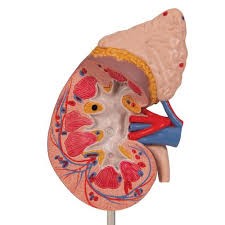
Kidney cysts are fluid-filled sacs that form within the kidney tissue. Most are simple cysts, which are benign, non-cancerous growths that often cause no symptoms and are discovered incidentally during imaging studies (e.g., ultrasound, CT, or MRI). Simple cysts are common, affecting about ۲۵-۴۰% of adults over ۵۰, and are typically harmless. However, some cysts can grow large (over ۵ cm) or become complex (with septations or calcifications), leading to symptoms or complications. Symptomatic or large cysts may press on surrounding structures, impair kidney function, or cause pain, necessitating intervention like sclerotherapy.
Indications for Percutaneous Sclerotherapy
Percutaneous sclerotherapy is recommended in the following cases:
- Symptomatic Cysts: Cysts causing pain (e.g., flank or abdominal discomfort), pressure, or urinary obstruction (e.g., blocking urine flow from the kidney).
- Large Cysts: Cysts exceeding ۵ cm in diameter that risk compromising kidney function or causing structural damage.
- Recurrent Cysts: Cysts that refill with fluid after previous aspiration, requiring sclerotherapy to prevent reformation.
- Complex Cysts with Low Malignancy Risk: For cysts classified as Bosniak II or IIF (based on imaging criteria), where malignancy is unlikely but symptoms persist.
- Patient Preference or Surgical Contraindications: For patients who prefer a less invasive option or are poor candidates for surgery due to comorbidities.
Sclerotherapy is not typically used for asymptomatic small cysts or highly suspicious (Bosniak III-IV) cysts, which may require surgical evaluation for possible malignancy.
Procedure for Percutaneous Sclerotherapy
Percutaneous sclerotherapy is performed under imaging guidance in an interventional radiology suite or outpatient setting. The procedure involves the following steps:
- Patient Preparation: The physician explains the procedure, benefits, and risks to the patient. Pre-procedure evaluations include blood tests (e.g., coagulation profile, kidney function tests like creatinine), imaging (ultrasound or CT to map the cyst’s size and location), and a medication review. Patients are advised to stop blood thinners (e.g., aspirin, warfarin) ۳-۵ days prior, if safe, and fast for ۴-۶ hours before the procedure. Antibiotics may be prescribed prophylactically to reduce infection risk.
- Local Anesthesia: Local anesthesia (e.g., lidocaine) is applied to the skin entry site, typically in the flank or back, to minimize discomfort. Mild sedation (e.g., midazolam) may be used for anxious patients, though general anesthesia is rarely needed.
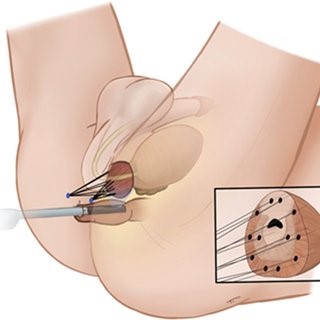
- Needle Insertion: Using real-time imaging (ultrasound or CT), the interventional radiologist inserts a thin needle (۱۸-۲۲ gauge) through the skin into the renal cyst. Ultrasound is preferred for its lack of radiation, while CT is used for deeper or complex cysts. The needle’s path avoids critical structures like blood vessels, bowel, or the renal pelvis.
- Cyst Aspiration: The fluid within the cyst is aspirated through the needle using a syringe. The volume removed can range from a few milliliters to over a liter, depending on the cyst’s size. The fluid is sent for laboratory analysis (e.g., cytology) if malignancy is a concern. Patients may feel mild pressure during aspiration.
- Sclerosing Agent Injection: After draining the cyst, a sclerosing agent—commonly ۹۵-۹۹% ethanol, but sometimes tetracycline, doxycycline, or sodium tetradecyl sulfate—is injected into the cyst cavity. The agent irritates the cyst’s inner lining, causing it to scar and collapse, preventing fluid reaccumulation. The volume of sclerosant is typically ۲۵-۵۰% of the aspirated fluid volume, and it is left in place for ۱۰-۲۰ minutes before being aspirated or left to absorb naturally.
- Post-Procedure Monitoring: The needle is removed, and the puncture site is bandaged. Patients are monitored for ۲-۴ hours to check for complications like bleeding or infection. Most are discharged the same day, with instructions to rest and avoid strenuous activities for ۲۴-۴۸ hours.
The procedure typically takes ۳۰-۶۰ minutes, depending on the cyst’s size and complexity.
Advantages of Percutaneous Sclerotherapy
Percutaneous sclerotherapy offers several benefits, making it a preferred option for managing symptomatic renal cysts:
- Minimally Invasive: Requires only a small needle puncture, avoiding large incisions and reducing tissue trauma compared to surgical cyst removal (decortication).
- Short Recovery Time: Patients typically resume light activities within ۲۴-۴۸ hours and full activities within ۳-۵ days, versus ۴-۶ weeks for surgery.
- High Success Rate: Studies (e.g., Journal of Vascular and Interventional Radiology, ۲۰۲۱) report ۸۰-۹۰% success in symptom relief and cyst volume reduction, with low recurrence rates (۱۰-۱۵%) when sclerotherapy is used.
- Outpatient Procedure: Most patients return home the same day, reducing healthcare costs and hospital stays.
- Preservation of Kidney Function: Targets only the cyst, sparing healthy renal tissue and maintaining kidney function.
- Repeatable: If the cyst recurs, the procedure can be safely repeated with minimal additional risk.
Potential Complications of Percutaneous Sclerotherapy
While percutaneous sclerotherapy is generally safe, with complication rates below ۵% in experienced centers, potential risks include:
- Pain at the Procedure Site: Mild to moderate flank pain is common but typically resolves within ۱-۲ days and is manageable with over-the-counter pain relievers (e.g., acetaminophen).
- Bleeding: Minor bleeding at the puncture site or intrarenal hematoma may occur (۱-۲% incidence). Significant bleeding is rare but requires monitoring, especially in patients with coagulopathy.
- Infection: There’s a low risk of infection at the puncture site or within the cyst (۱-۳%), minimized with prophylactic antibiotics and sterile technique.
- Cyst Recurrence: In ۱۰-۲۰% of cases, the cyst may refill, particularly if the sclerosing agent doesn’t fully obliterate the cyst lining. Repeat sclerotherapy or alternative treatments may be needed.
- Sclerosant Leakage: Rarely, the sclerosing agent may leak into surrounding tissues, causing irritation or, in extreme cases, damage to adjacent structures like the renal pelvis or blood vessels.
- Allergic Reactions: Some patients may react to contrast agents (used in CT-guided procedures) or sclerosants, though this is uncommon (<۱%).
Patients with complex cysts (Bosniak IIF) or underlying conditions (e.g., polycystic kidney disease) may face higher risks, requiring careful evaluation.
Post-Procedure Care and Recovery
Proper post-procedure care ensures optimal outcomes and minimizes complications:
- Immediate Monitoring: Patients are observed for ۲-۴ hours post-procedure, with vital signs and the puncture site checked for bleeding or swelling. Ultrasound may be used to confirm cyst collapse.
- Activity Restrictions: Avoid heavy lifting, strenuous exercise, or prolonged standing for ۴۸-۷۲ hours. Light activities (e.g., walking) can resume within ۲۴ hours.
- Pain Management: Mild pain is managed with acetaminophen or ibuprofen. Persistent or severe pain should prompt medical evaluation.
- Follow-Up: A follow-up visit within ۱-۲ weeks assesses symptom relief. Imaging (ultrasound or CT) at ۱-۳ months confirms cyst resolution or monitors for recurrence. Long-term follow-up may be needed for patients with multiple or complex cysts.
- Warning Signs: Patients should report fever (>100.4°F/38°C), severe flank pain, blood in urine (hematuria), or reduced urine output, as these may indicate complications like infection or obstruction.
Most patients experience symptom relief within days, with maximum benefits (e.g., reduced pain or pressure) seen within ۱-۲ weeks.
Comparison with Other Treatments
Percutaneous sclerotherapy is compared to other renal cyst management options:
| Feature | Sclerotherapy | Simple Aspiration | Surgical Decortication |
|---|---|---|---|
| Invasiveness | Minimally invasive | Minimally invasive | Invasive (open/laparoscopic) |
| Success Rate | ۸۰-۹۰% | ۳۰-۵۰% (high recurrence) | ۹۰-۹۵% |
| Recovery Time | ۱-۵ days | ۱-۳ days | ۴-۶ weeks |
| Risks | Bleeding, infection | Recurrence, bleeding | Infection, scarring |
| Cost (Approximate) | $۲,۰۰۰-۵,۰۰۰ | $۱,۰۰۰-۳,۰۰۰ | $۱۰,۰۰۰-۲۰,۰۰۰ |
| Repeatability | High | High | Limited |
- Simple Aspiration: Draining the cyst without sclerotherapy has a high recurrence rate (۵۰-۷۰%) because the cyst lining remains active.
- Surgical Decortication: Removes the cyst wall via open or laparoscopic surgery, with high success but greater risks and recovery time.
- Observation: Asymptomatic simple cysts (Bosniak I) are often monitored with periodic imaging, avoiding intervention unless symptoms develop.
Sclerotherapy balances efficacy and minimal invasiveness, making it ideal for symptomatic cysts in patients unsuitable for surgery.
Historical Context and Advances in Sclerotherapy
Sclerotherapy for renal cysts emerged in the 1980s, following the success of ethanol-based sclerotherapy for liver cysts. Early procedures used ultrasound guidance, with CT added in the 1990s for deeper cysts. Advances in microcatheters and sclerosing agents (e.g., doxycycline, which is less caustic than ethanol) have improved outcomes, reducing recurrence rates from ۳۰% to ۱۰-۱۵%. Modern 3D ultrasound and fusion imaging enhance precision, while research into biodegradable sclerosants aims to further minimize tissue irritation. These developments have made sclerotherapy a standard of care for symptomatic renal cysts in many centers.
Other Conditions Treated with Similar Techniques
Sclerotherapy principles are applied to other fluid-filled lesions:
- Liver Cysts: Symptomatic hepatic cysts, often in polycystic liver disease, are treated similarly with ethanol or tetracycline.
- Thyroid Cysts: Ethanol ablation reduces benign thyroid nodules, with ۸۰-۹۰% volume reduction.
- Lymphatic Malformations: Sclerosants like doxycycline treat cystic masses in soft tissues.
These procedures share ultrasound-guided needle delivery and sclerosant injection, highlighting sclerotherapy’s versatility.
Conclusion
Percutaneous sclerotherapy is an effective, minimally invasive treatment for symptomatic or large renal cysts, offering high success rates (۸۰-۹۰%) in symptom relief and cyst volume reduction. By draining the cyst and using sclerosing agents to prevent recurrence, it avoids the risks and recovery time of surgery while preserving kidney function. Though complications like pain, bleeding, or recurrence are possible, they are rare and manageable with proper care. As imaging and sclerosant technologies advance, sclerotherapy will remain a cornerstone of renal cyst management. Patients considering this procedure should consult an interventional radiologist or urologist to assess its suitability and discuss expectations.
Frequently Asked Questions About Percutaneous Sclerotherapy for Renal Cysts
- What is percutaneous sclerotherapy for renal cysts? It is a minimally invasive procedure that drains fluid from a kidney cyst and injects a sclerosing agent (e.g., ethanol) to prevent recurrence, used for symptomatic or large cysts.
- Why is sclerotherapy performed for renal cysts? It is used to relieve symptoms (e.g., pain, pressure), reduce large cysts affecting kidney function, or manage recurrent cysts after aspiration.
- What are the steps of the sclerotherapy procedure? The procedure involves patient preparation, local anesthesia, ultrasound- or CT-guided needle insertion, cyst fluid aspiration, sclerosant injection, and post-procedure monitoring.
- What are the potential complications of sclerotherapy? Complications may include mild pain, bleeding, infection, cyst recurrence (۱۰-۲۰%), or rare sclerosant leakage, though these are uncommon with proper technique.
- What are the advantages of sclerotherapy for renal cysts? Advantages include minimal invasiveness, short recovery (۱-۵ days), high success in symptom relief, and preservation of kidney function, with rapid return to daily activities.
If you have any questions about percutaneous sclerotherapy for renal cysts or would like to schedule a consultation with Dr. Alireza Abrishami, please visit the Contact Us page.